How to Choose Your First Oud Oil
April 11, 2026
Choosing your first oud oil isn’t about finding the rarest or most expensive bottle—it’s about discovering the scent that speaks to you. Take your time, explore different origins, and enjoy the experience.
Buying your first oud oil can feel overwhelming. With so many origins, scent profiles, and price points, it’s easy to assume that the most expensive bottle is the best choice. In reality, the right oud is the one that matches your personal preferences and introduces you to the fascinating world of natural agarwood.
1. Understand That Every Oud Is Different
Natural oud oil is not a single scent. Its aroma varies depending on where the agarwood tree grows, the species, climate, soil, and traditional distillation methods. An oud from India can smell completely different from one produced in Southeast Asia.
2. Choose a Scent Profile You Enjoy
Before selecting an oud, think about the fragrances you already like.
Sweet & Fruity: Smooth, approachable, and ideal for beginners.
Woody & Earthy: Rich, natural, and balanced.
Smoky & Leathery: Deep, powerful, and full of character.
Animalic: Bold, complex, and best appreciated after gaining experience with oud.
Starting with a profile you naturally enjoy will make your introduction to oud much more rewarding.
3. Don’t Judge by Price Alone
A higher price doesn’t automatically mean an oud is better for you. Factors such as rarity, age, origin, and production scale influence pricing. Some moderately priced oud oils can be more enjoyable than extremely rare oils, especially for someone just beginning their journey.
4. Start with Samples
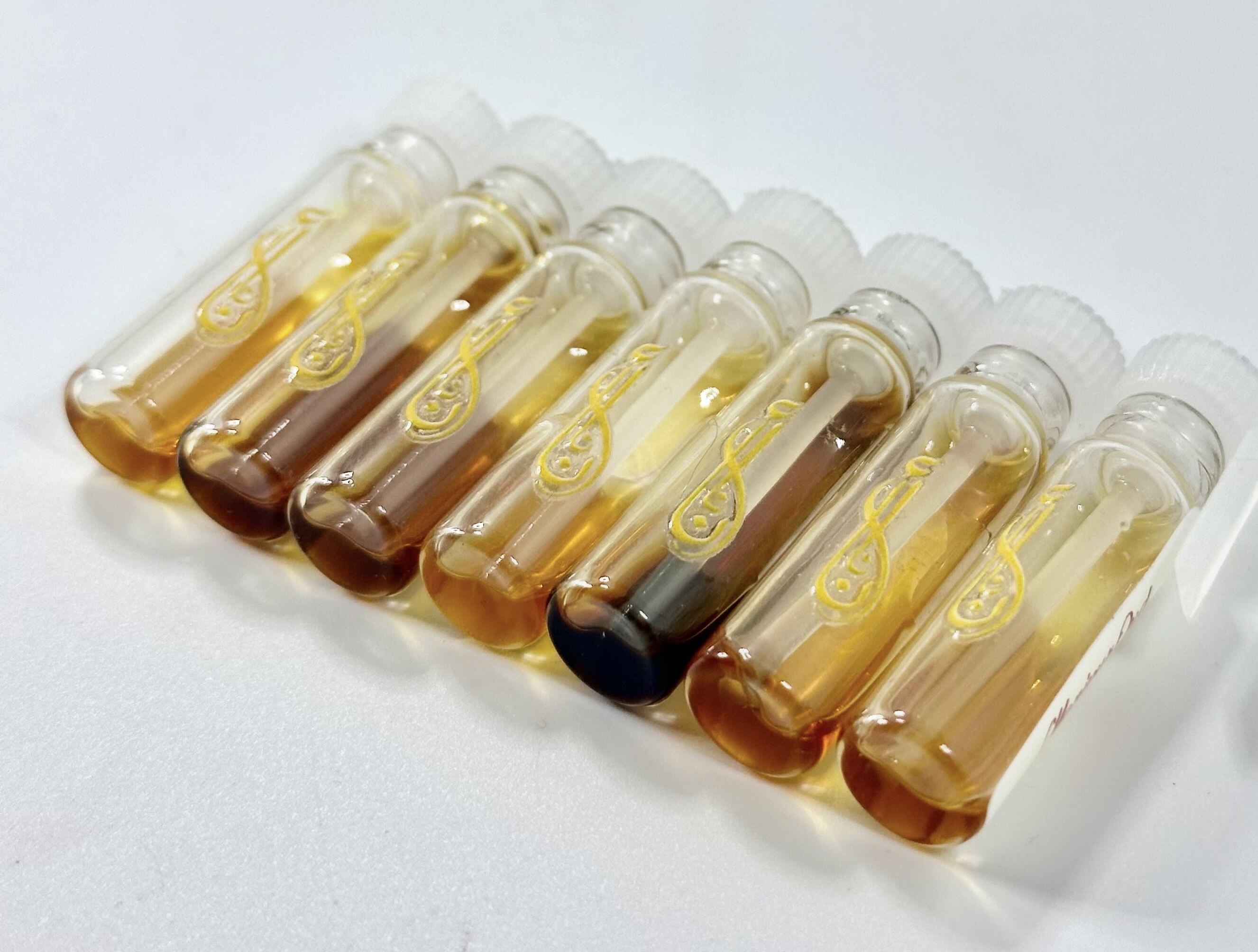
Instead of investing in a full bottle, begin with a curated sample set. Sampling different origins allows you to compare scent profiles side by side and discover which style suits your taste before making a larger purchase.
5. Give Oud Time
Natural oud changes beautifully on the skin. The opening, heart, and dry-down can be dramatically different, revealing new facets over several hours. Apply a small amount and allow the fragrance to develop before forming an opinion.
Final Thoughts
Choosing your first oud oil isn’t about finding the rarest or most expensive bottle—it’s about discovering the scent that speaks to you. Take your time, explore different origins, and enjoy the experience. Every oud tells a unique story, and your first bottle is only the beginning of an extraordinary journey into the world of natural agarwood.